
Mastering Puzzle Challenges Cognitive Strategies and Problem-Solving Science
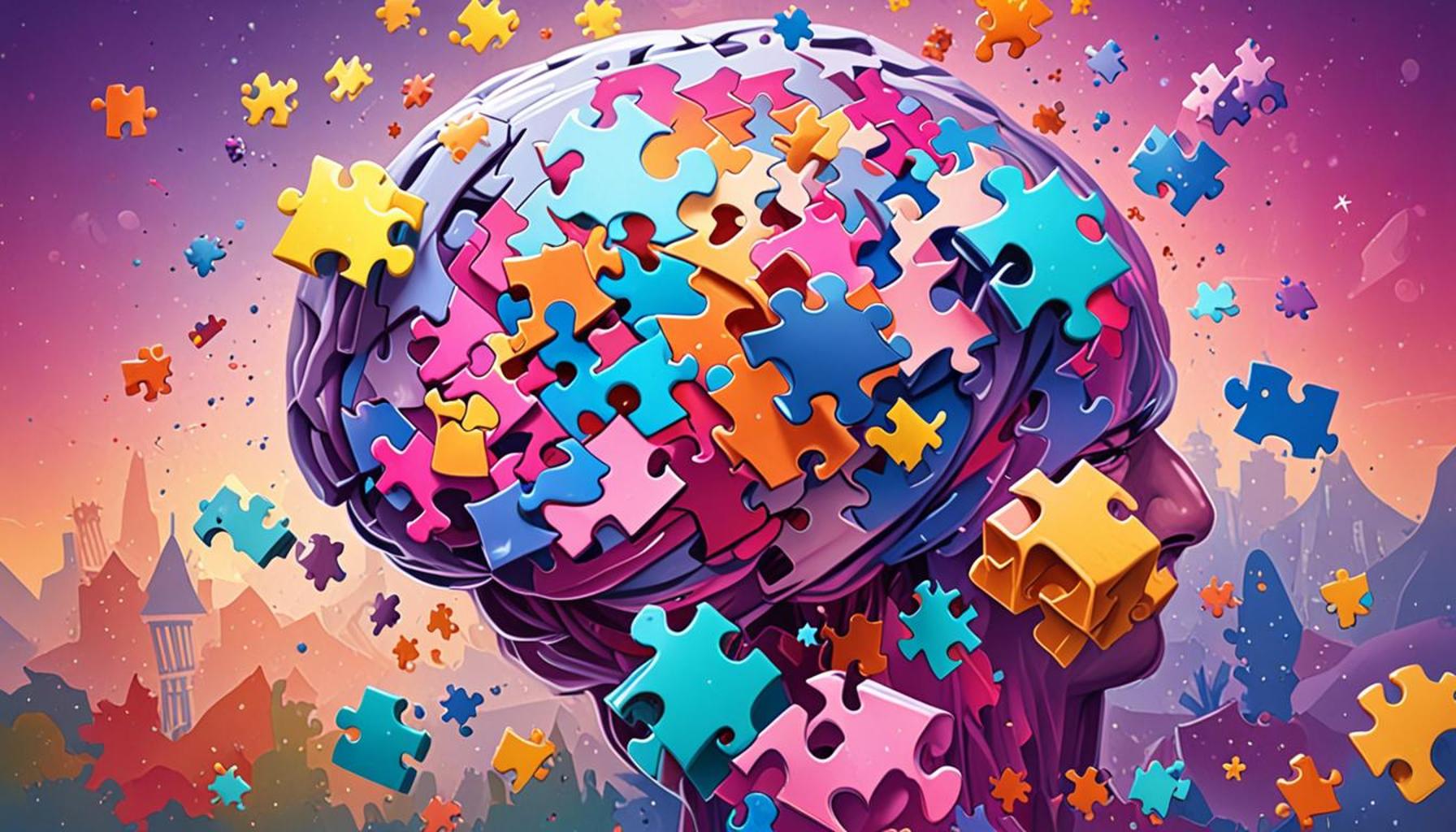
In an era dominated by digital entertainment, the charm of traditional mind games and puzzles remains as captivating as ever. These activities not only entertain but also serve as essential tools for enhancing cognitive skills, critical thinking, and problem-solving abilities. Whether you’re a casual player or a dedicated enthusiast, understanding the strategies to overcome cognitive challenges in puzzles can significantly heighten your performance and enjoyment.
The science of problem-solving delves into the mental processes that underpin our ability to tackle intricate challenges. By engaging with puzzles, individuals can experience benefits such as:
- Improved memory function
- Enhanced analytical skills
- Greater creativity and innovation
As we explore various methodologies and techniques to refine our puzzle-solving skills, be prepared to discover the Top 5 cognitive strategies that can transform your approach to problem-solving. From employing logical reasoning to embracing creative thinking, these strategies will guide you on a journey to becoming a master of puzzle challenges.
YOU MAY ALSO LIKE: Read this other article
Top 5 Strategies to Overcome Cognitive Challenges in Puzzles: The Science Behind Problem-Solving
Puzzles are not merely games; they represent a fascinating intersection of psychology, cognition, and strategy. When you engage with them, you’re essentially performing a dance with your mind, navigating through and overcoming various cognitive challenges. In this article, we will dissect the top five strategies for conquering these puzzles, diving into both the scientific principles and practical applications of each approach. Get ready to sharpen your mind and enhance your problem-solving skills!

5. Break It Down into Smaller Parts
One of the fundamental strategies in problem-solving is to deconstruct complex challenges. When faced with a difficult puzzle, be it a jigsaw or a Sudoku, it’s easy to feel overwhelmed. The first step is to break the problem down into more manageable components.
Consider the following when you tackle puzzles:
- Identify different sections: For jigsaw puzzles, separate pieces by color or edge pieces.
- Address simpler problems first: Completing easier sections of a Sudoku may provide the numbers needed for more difficult areas.
- Set incremental goals: Reward yourself as you achieve these smaller targets.
Breaking a problem into chunks is based on a widely studied cognitive process known as “chunking.” Chunking is utilized to simplify information processing, aiding in memory retention and cognitive load management. This approach not only clarifies your path but also supplies a succession of small victories that enhance motivation and focus, ultimately leading to the final goal. Additionally, research shows that solving problems in bite-sized pieces can reduce stress and anxiety, creating a positive feedback loop in which each solved section fuels further progress.
4. Embrace a Variety of Perspectives
When dealing with cognitive challenges, your perspective can make all the difference. Embracing different ways of viewing a problem enhances your problem-solving skills significantly. Studies in cognitive psychology reveal that individuals who consider alternative angles are generally better at finding solutions.
You can improve this skill by:
- Asking “what if” questions: What if a piece of the puzzle fits somewhere else?
- Consulting others: Share your problem with friends or family to gain fresh ideas.
- Changing your environment: Sometimes a different setting can spark innovative thoughts.
Think of perspective as the lens through which you see and interpret the world. By consciously shifting that lens, you may discover solutions that were invisible at first glance. Consider a Rubik’s Cube – it appears daunting when viewed from a single perspective, but rotating the cube and examining it from all angles can reveal patterns and paths to success. This strategy encourages creativity and innovation, broadening your cognitive toolkit and equipping you to tackle more complex challenges.
3. Leverage Logical Reasoning
The ability to employ logical reasoning is intrinsic to effective problem-solving, especially in puzzles that require critical thinking. Recognizing patterns, understanding relationships between different components, and applying rules systematically are all parts of this strategic toolbox.
It’s essential to:
- Analyze known facts: Build your solution based on what you know and proceed logically.
- Make educated guesses: Sometimes, a reasoned hypothesis can lead you closer to the correct answer.
- Check for consistency: Ensure that your solution fits all constraints of the puzzle.
Logical reasoning is the science of thinking clearly and efficiently. Puzzles like Sudoku or logic grids revolve around deductive reasoning – understanding that if A is true, then B must necessarily follow. Training yourself to approach puzzles methodically with logic and reasoning fortifies your mental fortitude, enhancing your ability to engage in complex problem-solving in diverse real-life contexts, from strategic business decisions to everyday tasks.
2. Practice Mindfulness and Focus
In our fast-paced world, maintaining focus can be a daunting task. Enter mindfulness—a practice that enhances cognitive control and boosts attention span, vital attributes for puzzle-solving. Mindfulness allows you to be fully present and concentrate on the task at hand, minimizing distractions that can inhibit your logical thought process.
To incorporate mindfulness while solving puzzles, consider:
- Engaging in deep breathing techniques before starting.
- Setting specific time intervals for concentrated work sessions.
- Reflecting briefly on your progress regularly to maintain clarity.
The practice of mindfulness meditation has been shown to reduce stress and increase cognitive flexibility, making it a powerful tool for puzzle enthusiasts. By cultivating a mindful approach, you encourage your brain to remain calm and focused, leading to increased productivity and creativity. This strategy promotes efficient cognitive functioning and helps you commit to your problem-solving endeavors more fully, enabling more profound insights and faster solutions.
1. Adopt a Growth Mindset
At the pinnacle of strategies for overcoming cognitive challenges is the growth mindset. This concept, popularized by psychologist Carol Dweck, emphasizes the belief that intelligence and skills can be developed over time through persistence and effort. When you approach puzzles with a growth mindset, you actively embrace challenges and view obstacles as opportunities to learn rather than threats to your intelligence.
Implementing a growth mindset can be achieved through:
- Viewing failures as learning experiences: Understand that stumbling blocks are part of the journey.
- Setting personal challenges: Challenge yourself with increasingly difficult puzzles.
- Celebrating effort over outcome: Value the effort you put into solving puzzles more than simply completing them.
The growth mindset transforms your relationship with challenges. Where a fixed mindset sees static skill and intelligence levels, a growth mindset perceives every puzzle and problem as a stepping stone towards enhanced cognition. This shift in thinking encourages resilience, perseverance, and a lifelong passion for learning. It is an empowering concept that fuels improvement across various domains, encouraging you to tackle not just puzzles, but any of life’s challenges with enthusiasm and confidence.
In conclusion, solving puzzles and overcoming cognitive challenges requires a multi-faceted approach, drawing upon scientific insights and strategic thinking. Whether you break down the problem, shift perspectives, apply logic, cultivate mindfulness, or adopt a growth mindset, each strategy fortifies your mental faculties. These strategies are not only effective for puzzles but are also invaluable tools for navigating the complexities of daily life.
| Cognitive Strategies | Description |
|---|---|
| Chunking | This involves breaking down complex information into smaller, manageable elements. Chunking helps facilitate memory retention and retrieval, making it easier to approach challenging puzzles. |
| Visual Imagery | Using visualization techniques can enhance problem-solving skills by enabling individuals to mentally represent and manipulate puzzle components. This can lead to a deeper understanding and quicker solutions. |
| Systematic Trial and Error | A methodical approach to solving puzzles by evaluating potential solutions in a structured manner often leads to successful outcomes. Trial and error can foster resilience and enhance critical thinking skills. |
| Metacognitive Strategies | Reflecting on one’s own problem-solving processes allows for self-regulation and adaptation of strategies. This can improve future performance in tackling cognitive challenges, as individuals learn what techniques yield the best results. |
The landscape of cognitive puzzle-solving is vast and intricate, much like the puzzles themselves. Understanding and employing various strategies not only demystifies these challenges but also positions solvers to engage with them more effectively. The mechanisms of chunking exemplify a simple yet powerful tool in cognitive psychology; by organizing information into smaller “chunks,” individuals can significantly improve their memory and learning capabilities. Furthermore, the use of visual imagery enables solvers to create mental models of problems, harnessing the power of visualization to conceptualize complex constructs. This cognitive representation enhances understanding, leading to quicker synthesis and innovative solutions. The balance of structured methods like systematic trial and error permits individuals to dissect problems methodically, reinforcing both resilience and analytical capacities.Equally vital are metacognitive strategies, which encourage an awareness of one’s cognitive processes. By reflecting on how they approach problem-solving, individuals can refine their methods over time, nurturing a more adaptive and flexible mindset when facing future puzzles. Each of these strategies contributes to a comprehensive toolkit that can empower individuals to transcend cognitive hurdles, fostering both skill and confidence as they delve into the rich world of puzzles.
RECOMMENDED: Check out this similar article
Frequently Asked Questions about Cognitive Challenges in Puzzle Solving
What are some effective strategies for overcoming cognitive challenges in puzzle solving?
One effective strategy is to break down the puzzle into smaller, manageable parts. By focusing on smaller sections, you can reduce cognitive load and make the process less overwhelming. Another technique is to practice mindfulness, which helps maintain focus and reduce stress. Cognitive exercises, such as practicing memory and pattern recognition, can also enhance problem-solving skills.
How does solving puzzles impact cognitive abilities?
Solving puzzles is more than just a pastime; it actively engages and improves cognitive functions. Engaging in puzzles regularly has been shown to enhance problem-solving skills, boost memory, and increase spatial reasoning abilities. Additionally, puzzles can help improve attention span and concentration, making them a valuable tool for cognitive development.
What kind of puzzles are best for cognitive enhancement?
Different types of puzzles can target various cognitive skills. For instance, crossword puzzles are excellent for enhancing vocabulary and verbal skills, while jigsaw puzzles improve spatial awareness and problem-solving abilities. Sudoku puzzles are great for developing logical thinking and number skills. Choosing a variety of puzzles can provide a more comprehensive cognitive workout.
Is there a scientific basis for using puzzles as a cognitive improvement tool?
Yes, several studies support the use of puzzles in cognitive enhancement. Research indicates that regular puzzle engagement can lead to improvements in cognitive abilities and may even delay the onset of cognitive decline in older adults. The mental exercise involved in solving puzzles stimulates neural pathways, promoting brain health and neuroplasticity.
LEARN MORE: This related article may interest you
Conclusion: Unlocking the Mysteries of Puzzle Solving
The exploration of cognitive challenges in puzzle-solving provides an intriguing insight into the intricate workings of the human mind. The article delved into various strategies that enhance one’s ability to tackle these challenges efficiently, while also shedding light on the scientific principles behind effective problem-solving. Understanding the importance of breaking down problems, leveraging pattern recognition, utilizing lateral thinking, and maintaining a mindset of patience and perseverance are crucial takeaways.
As the article highlighted, embracing cognitive challenges is not just about improving puzzle-solving skills, but also about fostering critical thinking, boosting mental acuity, and promoting a growth mindset. These aspects play a vital role in daily life, as they help individuals adapt to a rapidly changing world and enhance their ability to approach complex issues with confidence.
Moreover, the scientific insights presented emphasize the significant impact of mental exercises on brain health and performance. By engaging in puzzles, individuals can stimulate neural pathways, improve memory, and enhance overall cognitive function.
In conclusion, the pursuit of mastering cognitive puzzles offers more than just entertainment; it is a gateway to profound mental development and insight. This area holds potential for further exploration and research, encouraging enthusiasts and academics alike to delve deeper. Mind games and puzzles, therefore, serve as vital tools for sharpening intellect and enhancing personal growth, proving that the journey of problem-solving is as rewarding as the destination itself.