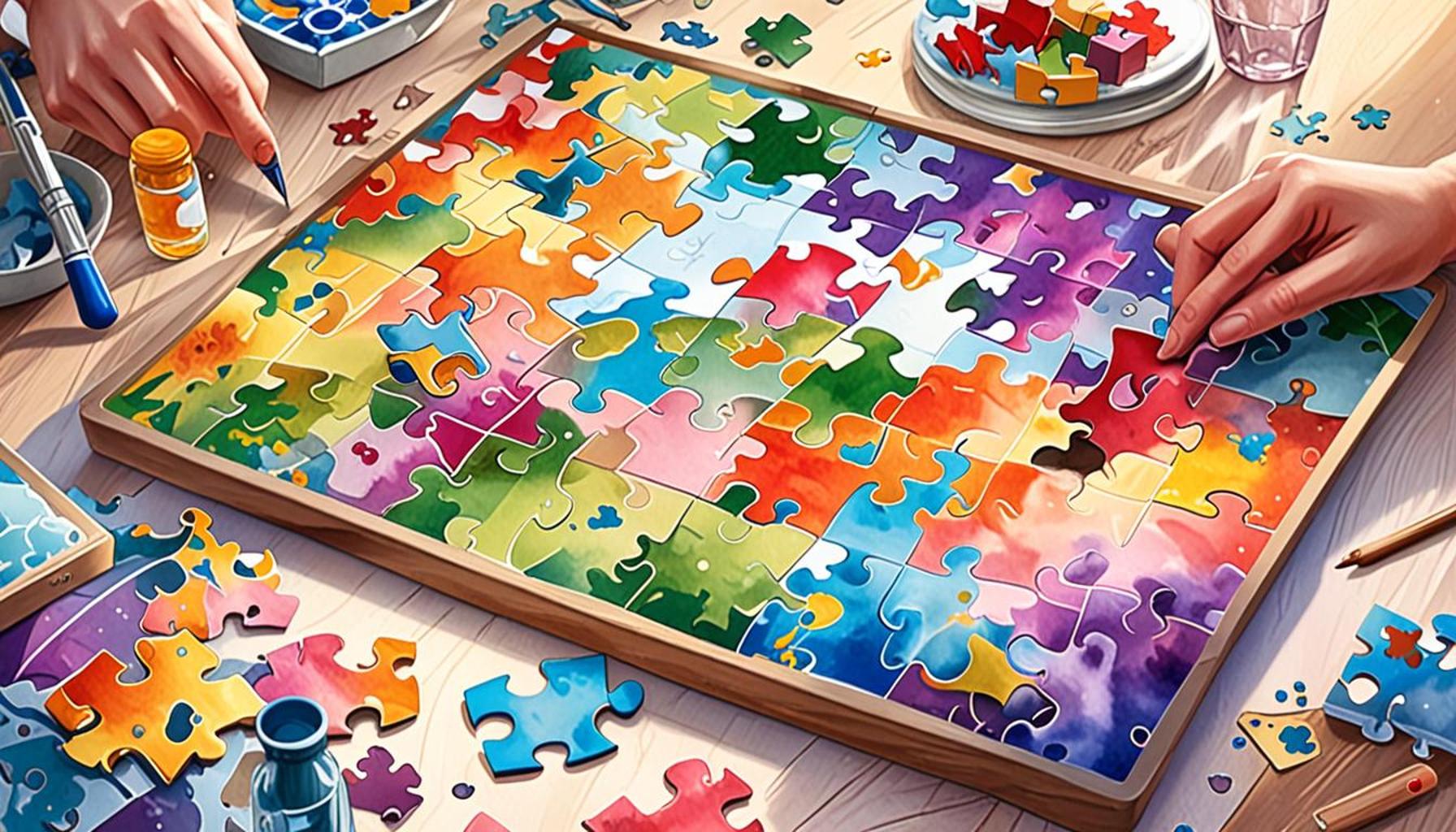
Exploring Strategies in Board Games: How Group Decisions Influence the Outcome

The Intricacies of Board Game Strategies
In the vibrant world of board games, every move matters. Players gather around tables, often in lively spirits, wielding not just pieces and cards but also the power of collective decision-making. Exploring how group strategies shape outcomes can unveil fascinating insights into the psychological and social dynamics at play.
A key aspect of these dynamics is the diversity of player personalities. In a typical game, a player may adopt various roles depending on their approach: an aggressive player may adopt a strategy aimed at dominating the game early on, reaping rewards from the start, while a defensive player might choose to hold back, carefully selecting their moves to safeguard against potential threats. Even more interesting is the collaborative player, who seeks to build alliances and foster teamwork, navigating the game with the knowledge that mutual support can lead to favorable outcomes. Understanding these varied styles can add depth and strategy to any game session.
The social relationships among participants also play a significant role in shaping game dynamics. Playing with friends or family often leads to a different atmosphere than playing with strangers; there may be a blend of trust and rivalry that influences players’ decisions. A friendly game of Ludo in Nigeria can evoke laughter and playful banter, heightening engagement while simultaneously challenging strategies. In contrast, the more competitive environment found in a game of Monopoly can strain friendships, as players face the hard realities of finances and property acquisition, forcing tougher decisions about alliances and betrayals.
Moreover, the specific rules and mechanics of a game like Risk or Settlers of Catan dictate how players interact with each other. In Risk, for example, players must weigh military strength against territory control, navigating between forming temporary alliances for mutual benefit and potentially backstabbing those same allies at crucial moments. Such mechanics consistently challenge players to adapt their strategies. When players negotiate trades in Settlers of Catan, they are not just bargaining over resources; they are building relationships and trust, which can influence decisions long after the game ends.
As players engage in these intricate dynamics, the blend of competition and cooperation can lead to unexpected outcomes. Take, for instance, a game of Scrabble, where forming alliances may emerge not just for shared victories but also around social interactions that enhance enjoyment. Understanding these dynamics not only enriches the gaming experience but also provides invaluable lessons in negotiation, teamwork, and leadership. In today’s fast-paced world, the insights gained from these board game interactions can translate into effective strategies in professional and personal contexts.

So the next time you gather around the table for a game night in Nigeria, remember that every dice roll, card flip, and strategic move fosters a tapestry of interpersonal connections that extends far beyond the game itself.
RECOMMENDED: Check out this similar article
The Role of Player Personality in Board Game Outcomes
In the realm of board games, player personalities drastically influence the strategic landscape. Each participant brings a unique set of traits, which dictate their approach and decision-making style. Understanding these characteristics not only enhances gameplay but also provides insight into how group dynamics coalesce to shape the final outcome.
The Aggressor, the Defender, and the Collaborator
Within any gaming group, one can often identify three primary archetypes of players:
- The Aggressor: This player thrives on competition, eager to assert dominance early in the game. They may employ strategies that focus on offensive maneuvers, potentially sidelining their opponents.
- The Defender: A more cautious player who tends to prioritize safety and stability. Their strategy often revolves around mitigating risks, which can lead to prolonged but less volatile gameplay.
- The Collaborator: This player seeks to foster alliances and build relationships, influencing the game’s course through mutual support and negotiation. Collaboration can lead to creative strategies that benefit multiple parties, yet it also opens the door for betrayal.
Recognizing these personalities can provide players with an awareness of their own tendencies as well as those of their opponents, paving the way for more nuanced strategies. For instance, an aggressor might consider tempering their gameplay to prevent making enemies in the early rounds, while a defender can seize opportunities to ally with the aggressor, providing them with a needed advantage against others.
The Impact of Social Relationships
Another fascinating layer to consider is the impact of social relationships among players. Playing with close friends or family may cultivate a relaxed environment where strategies are fluid, defined more by laughter and shared history than by competitive fervor. This scenario often leads to more exploratory decision-making, as players are willing to take risks, knowing that the social bonds can endure beyond a few competitive blunders.
Conversely, engaging in a game with unfamiliar players often heightens the stakes. In this context, players might feel pressured to navigate through unseen alliances and rivalries, resulting in strategic choices driven by a desire to gauge opponents’ intentions. For example, a game of Cards Against Humanity could rapidly shift from playful banter to sharp wit as players try to outsmart newcomers or assert their humor, revealing personality traits that impact participation levels.
Game Mechanics as Strategic Influencers
The rules and mechanics of each board game serve as a framework that restricts and guides player decisions. Games like Carcassonne or Codenames exemplify distinct mechanics that shape group dynamics. In Carcassonne, players must weigh their options against the board’s evolving landscape, often evaluating whether to support a fellow player’s city or compete for territory. Codenames, meanwhile, emphasizes word association that requires collaborative thinking, where one team’s success hinges on the clarity of communication among its members.
As players navigate through these diverse gameplay dynamics, they must constantly reassess their strategies in light of both personality traits and social contexts. Such awareness opens the door to deeper interactions, providing invaluable lessons in negotiation, understanding, and flexibility—skills that translate far beyond the gaming table.
| Strategy Type | Group Dynamics |
|---|---|
| Cooperative Strategies | Emphasize collective goals, increasing team morale and collaborative efforts. |
| Competitive Strategies | Encourage healthy competition, driving players to enhance their skills and develop tactical decision-making. |
| Consensus Building | Fosters engagement and ensures diverse perspectives contribute to final decisions, enhancing group cohesion. |
| Role Assignment | Utilizes individual strengths effectively, resulting in more strategic approaches and better outcomes. |
Exploring the intricate impact of group decisions in board games unveils the complexities behind their outcomes. Players often face the challenge of blending personal tactics with team dynamics, leading to various strategies that shape the game’s trajectory. Cooperative strategies drive participants to engage in collective efforts, while competitive strategies inspire players to sharpen their skills. Balancing these approaches often necessitates consensus building, where diverse viewpoints are essential to making well-rounded choices.Assigning roles based on individual strengths further enhances the gameplay experience, turning players into specialized contributors. This intentional structure not only fosters a strategic focus but also promotes a deeper understanding of group dynamics and collective decision-making processes. As players navigate through these complex strategies, the outcomes become more unpredictable and engaging, inviting participants to continuously adapt and refine their gameplay.
CHECK OUT: Click here to explore more
Understanding Strategic Communication in Board Games
In the intricate world of board games, communication strategies among players play a pivotal role in influencing outcomes. The way players express their intentions, negotiate terms, and articulate their plans can significantly affect not only their chances of winning but also the overall group dynamic. Communication, whether verbal or non-verbal, can be a game-changer that can elevate or doom a player’s strategy.
The Art of Persuasion
One of the most fascinating aspects of board games is the art of persuasion. Players often engage in discussions, attempting to persuade others to follow specific paths that may benefit their positions in the game. In titles like Werewolf, players must convince others of their innocence or present a strong case against supposed threats. The subtle nuances of persuasion shape alliances, as individuals weigh trust against their instincts. A skilled persuader can manipulate group decisions and shift the outcome in their favor.
Non-verbal Cues and Group Dynamics
Moreover, non-verbal communication often weaves itself into the fabric of gameplay. Players might rely on body language, facial expressions, and tone of voice to convey unspoken messages or gauge reactions. A genuine smile or a moment of hesitation can speak volumes in a competitive setting. For instance, in a game of Monopoly, players may carefully observe their competitors’ reactions when negotiating trades, gleaning valuable insights that can fine-tune their strategic approaches.
In Nigeria, where social interactions are rich with cultural nuances, players may find additional layers of complexity in these non-verbal cues. The way players laugh, sigh, or even remain silent can indicate much more than mere emotions; they can hint at underlying strategies or alliances. Thus, recognizing these subtle hints can give players in Nigerian board game sessions an edge that transcends language barriers.
Decision-Making Under Pressure
Group decisions in board games often thrust players into high-pressure scenarios where quick thinking becomes essential. Games like Time’s Up! or Trust Me! require players to make rapid decisions that could either cement their standing or lead to their downfall. Under these circumstances, the ability to read the room and understand the emotional temperature becomes crucial. Are players feeling confident, nervous, or competitive? Tapping into the collective atmosphere can reveal what strategies may gain traction or fall flat.
Furthermore, studies indicate that groups typically arrive at better decisions when they engage in open dialogue, sharing distinct viewpoints. This exchange can foster innovative strategies that might not surface during individual contemplation. Research emphasizes that players who contribute diverse ideas or alternate viewpoints tend to enhance the overall group strategy. This is particularly evident in team-based games like Scythe, where collaboration can lead to creative solutions that reshape expectations.
Strategic Flexibility: Adapting to Evolving Situations
In the context of board games, the ability to adapt is essential. Players must continually assess their strategies, not only based on their own objectives but also through the lens of shared group decisions. Recognizing when to pivot, join forces, or even betray a former ally can determine the tide of the game. This need for adaptability is especially pronounced in games that dynamically change based on player actions, such as Settlers of Catan, where resource scarcity and player interaction compel opponents to rethink their plans constantly.
Ultimately, successful players understand that their fate is often intertwined with group decisions. By mastering the subtleties of communication, persuasion, and adaptability, they can navigate the complexities of board games, ensuring that their strategies are not just reflections of individual skill but are intricately linked to the dynamics of the entire group.
SEE ALSO: Click here to read another article
Conclusion: The Power of Collective Strategy in Board Games
In the vibrant world of board games, the influence of group decisions cannot be understated. This exploration into strategies reveals that interactions among players—through communication, persuasion, and adaptability—significantly shape the gaming experience and its outcomes. Effective strategic communication creates an environment ripe for collaboration or competition, where individuals’ insights can enhance group strategies and lead to victory. The ability to read non-verbal cues, understand group dynamics, and make swift decisions under pressure ultimately plays a defining role.
Moreover, this ability to adapt to evolving situations illustrates a fundamental aspect of board gaming: it is as much about individual skill as it is about navigating social conditions. In Nigerian contexts, where traditional and contemporary influences shape social interactions, players can gain a unique advantage by honing their ability to interpret subtle cues and adjust strategies accordingly. Whether initiating alliances or deciding when to betray trust, awareness of the collective mood can be the key turning point in a game.
As board games continue to bring people together, the importance of understanding how group decisions can sway the outcome invites players to delve deeper into the fascinating interplay of strategy and sociology. Each play session stands as a microcosm of negotiation and human interaction; thus, recognizing the collective over the individual may not just be a strategy for winning, but also a path to enriching the communal experience of gaming. Engaging in these dynamics illuminates a broader reflection on how decision-making in a group setting can lead to profound insights, not only within the game but also in our everyday lives.