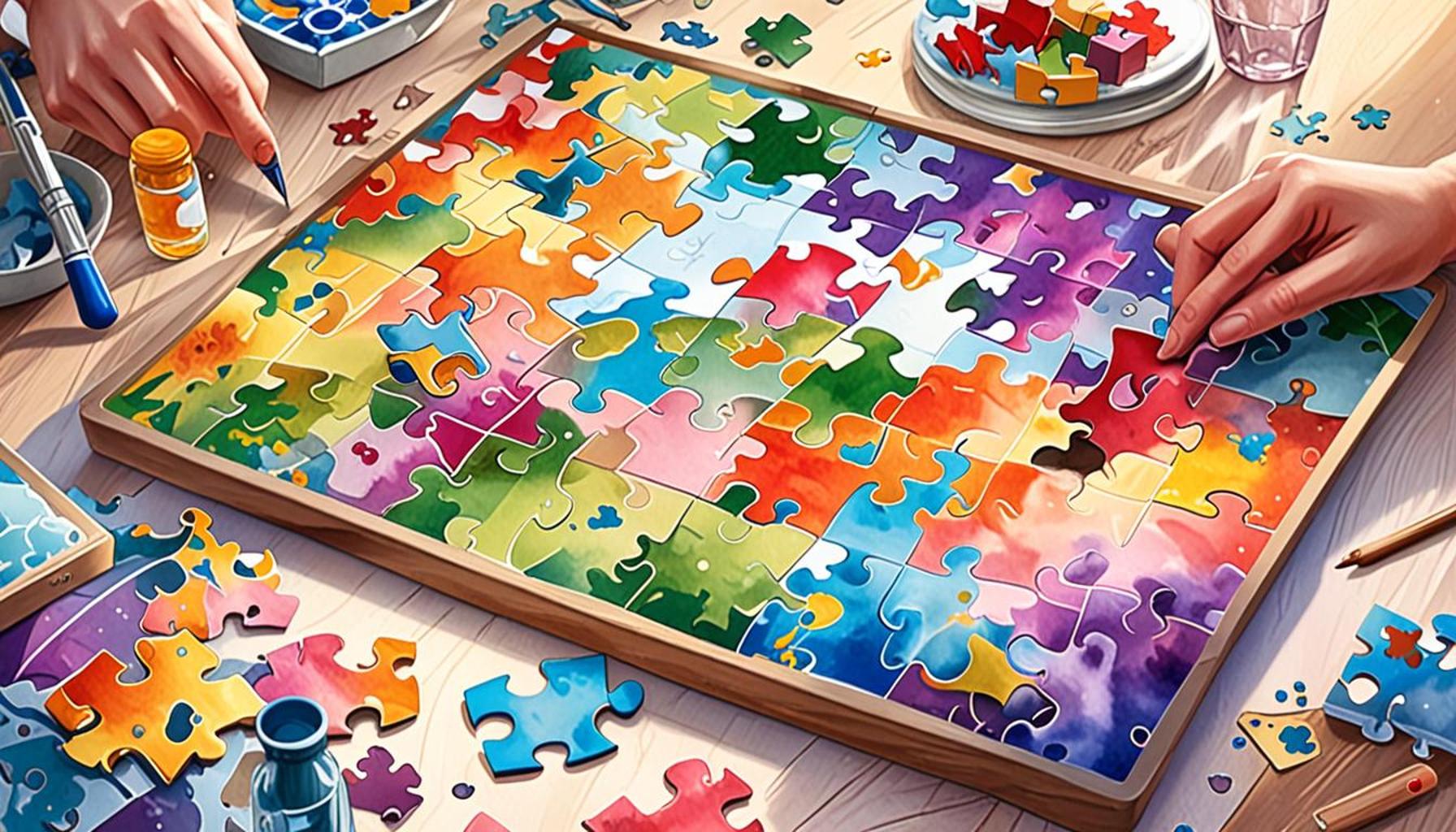
Group Puzzle Solving Strategies: Strengthening Relationships Through Play
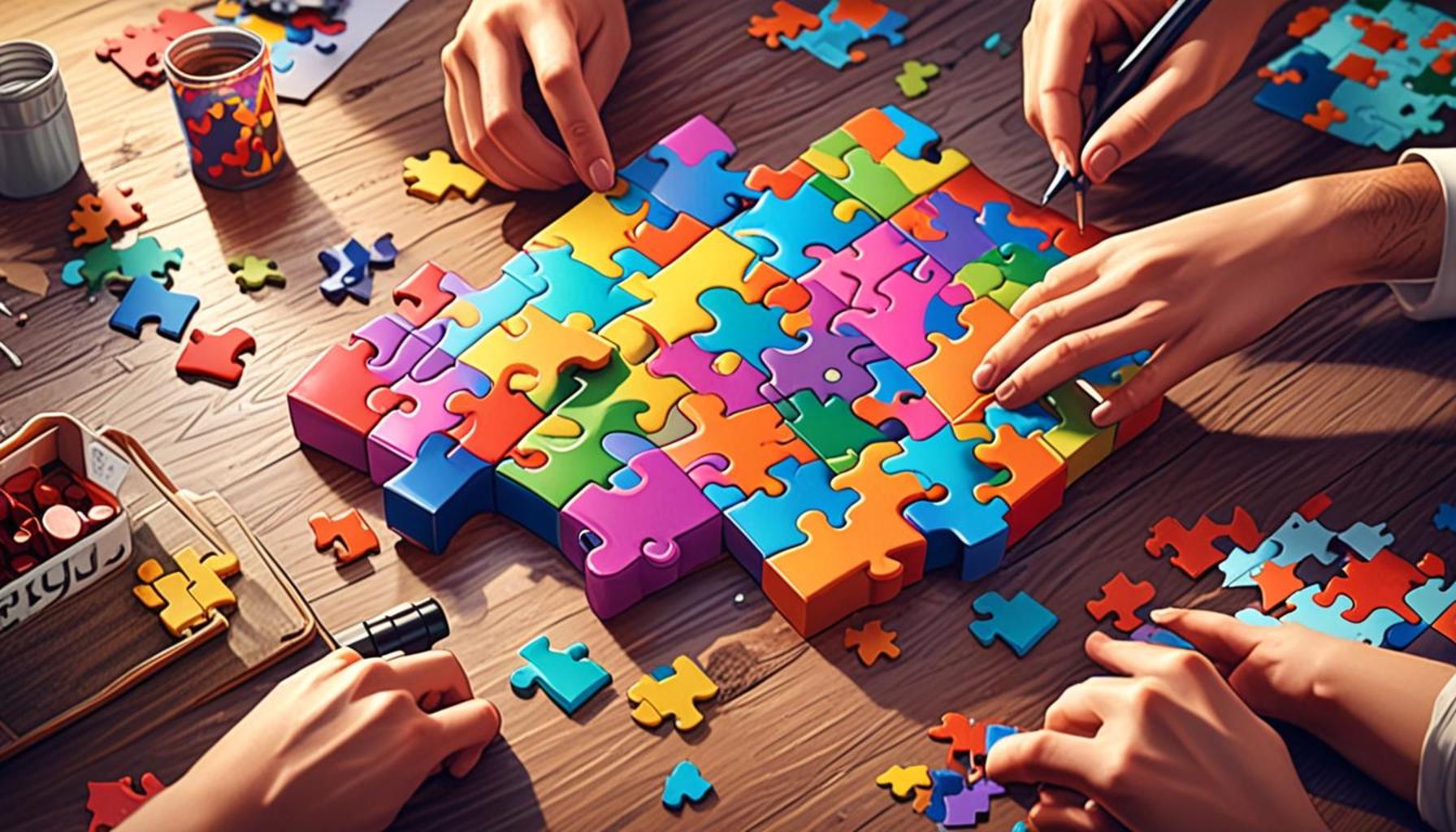
The Importance of Collaborative Problem-Solving
In today’s fast-paced world, the rapid flow of information and the busyness of work life can often overwhelm personal relationships. As social beings, we crave connections with family, friends, and colleagues, yet finding the time to engage meaningfully with one another is increasingly challenging. One potent solution lies in the realm of collaborative problem-solving activities, particularly through engaging challenges such as puzzles. Not only do these activities provide enjoyment, but they also serve as a robust framework for strengthening bonds.
When groups participate in puzzle-solving, they embark on a journey that unfolds numerous benefits, including:
- Boosting Creativity: Collaborative environments harness the diverse perspectives of participants, allowing for innovative ideas to surface. For instance, when assembling a jigsaw puzzle, each member might contribute unique strategies, leading to an enriched approach to problem-solving.
- Fostering Trust: As team members navigate challenges together, they build a reliable foundation of support. This is especially vital in a Nigerian context where communal connections and trust often underpin relationships.
- Encouraging Patience: Engaging in puzzle-solving activities teaches individuals to remain calm under pressure, cultivating a sense of resilience and composure that is valuable in both personal and professional settings.
Consider traditional games like “Ludo” and “Ayo” that are popular across Nigeria. These games inherently revolve around strategy and teamwork. By incorporating traditional puzzles or game styles, groups can enhance their collaborative experiences in a relatable way. Engaging with these familiar cultural elements not only boosts participation but also enriches the bonding experience.
Puzzles manifest in various forms, including crosswords, jigsaw puzzles, and escape rooms. Each form cultivates different aspects of collaboration. For example, escape rooms require timely communication, where participants must share clues and ideas to succeed. This fast-paced interaction fosters teamwork and creates an exhilarating environment where friendships can flourish.
In subsequent sections, we will explore effective group puzzle-solving strategies in depth, revealing how these activities can fortify relationships through the joyous power of play. Together, we will unlock the potential that collaborative games hold for nurturing social bonds—perhaps even persuading you to set up your next family game night or team-building event around a good puzzle challenge. Through play, we don’t just connect; we grow together.
YOU MAY ALSO LIKE: Read read another article
Unlocking the Potential of Collaborative Puzzle Solving
Engaging in group puzzle-solving activities can be a transformative experience, not only for individual participants but also for the relationships that bind them. These activities encourage social interaction and communication, essential elements in cultivating deeper connections. As groups come together to untangle a complex puzzle, they actively participate in a process that enhances both their cognitive and emotional frameworks.
Much like a well-cooked pot of Nigerian jollof rice, the success of group puzzle solving relies on the right mix of ingredients. Here are a few essential strategies to harness the full power of collaborative problem-solving:
- Establish Roles: Just as every ingredient in a pot contributes to the overall flavor, assigning specific roles within the group can allow each person to leverage their strengths. For instance, during an escape room challenge, one participant may excel at observation while another may shine in logical reasoning. By clarifying duties, groups can navigate puzzles more efficiently.
- Communicate Openly: The foundation of successful group dynamics is effective communication. Encouraging group members to share thoughts, ideas, and even frustrations can foster an environment where each person feels valued. This open dialogue is vital, particularly in a Nigerian setting where collective support is essential for navigating challenges.
- Practice Active Listening: Beyond speaking, listening plays a crucial role in collaboration. Participants should focus on their peers’ inputs, acknowledging their contributions, and building on them to arrive at a collective solution. Active listening fosters empathy and deeper understanding among group members, reinforcement of the essential bonds that come from sharing mental space.
- Cultivate a Positive Atmosphere: Maintaining a light-hearted environment can greatly influence a group’s dynamics. Incorporating humor and encouragement helps alleviate the stresses related to problem-solving. For example, a friendly competition among family members resolving a jigsaw puzzle can facilitate a joyful atmosphere, encouraging camaraderie and connection.
As puzzle enthusiasts engage with these strategies, they unlock layers of potential that contribute to their relationships. Each challenge presents a unique opportunity for connection and understanding, transforming mere players into partners in a collaborative journey. This is particularly resonant in Nigeria, where community and interpersonal connections are cornerstones of society.
The next frontier in enhancing group puzzle-solving strategies involves adapting traditional puzzles to contemporary settings. Consider integrating familiar elements of local culture. Games like “Ayo” can be translated into collaborative puzzle challenges, merging tradition with modern interactive play. This adaptation not only fosters participation but also strengthens relational ties through cultural resonance.
As we delve further into the world of group puzzle-solving strategies, we will uncover more intricate techniques that can help to deepen the relationships that matter most, encouraging readers to reflect on their communal experiences and the joy of solving problems together.
| Advantage | Description |
|---|---|
| Enhanced Collaboration | Group puzzle solving tasks promote teamwork and develop communication skills. |
| Strengthened Trust | Collaborating on challenges fosters trust and bond among participants, leading to improved relationships. |
By introducing group puzzle solving strategies, participants engage in activities that require teamwork, which in turn enhances collaborative efforts. As individuals work together to find solutions, they unlock their potentials and benefit from varying perspectives, enriching the group dynamic. This participatory approach can actually serve as a platform for learning to resolve conflicts and approach problems creatively.Furthermore, the act of collaborating on puzzles strengthens trust within the group. When individuals rely on each other’s skills and insights, it creates a sense of mutual respect and understanding, which is fundamental in nurturing healthy relationships. These strategies not only focus on playful interactions but also highlight the importance of emotional connections, significantly improving interpersonal skills. Each successful puzzle completion reinforces bonds, encouraging participants to explore deeper relationships. Through effective play, participants can cultivate lasting friendships and collaborative networks essential for both personal and professional growth.
CHECK OUT: Click here to explore more
Leveraging Technology in Collaborative Puzzle Solving
In an increasingly digital world, technology emerges as an essential player in enhancing group puzzle-solving strategies. With the rise of virtual escape rooms and online puzzle platforms, groups can now engage in collaborative challenges that transcend geographic boundaries. This evolution offers unique opportunities for connecting individuals, particularly in a Nigerian context where family members and friends often reside in different towns or even countries.
One of the most promising aspects of technology in puzzle-solving is the ability to include a diverse array of participants. For instance, groups can invite relatives from distant locations to join online puzzle sessions, promoting deeper connections despite miles apart. Research has shown that engaging in shared activities, even through screens, can improve interpersonal relationships, fostering a sense of belonging and camaraderie.
- Utilize Apps for Group Activities: There are numerous apps designed specifically for collaborative games. By downloading popular puzzle-solving applications, friends or family can work together to solve challenges right from their homes. This accessibility means that every participant can contribute their unique perspectives to find solutions, reinforcing the concept of unity and collaboration.
- Engage in Social Media Challenges: Social media platforms are fertile grounds for collective problem-solving. Groups can partake in weekly or monthly puzzle challenges, sharing their progress on platforms like Facebook or WhatsApp. Such activities not only boost engagement but also provide a platform for friendly competition, motivating participants to support one another and celebrate their collective achievements.
- Implement Virtual Reality Experiences: With advances in technology, virtual reality offers breathtaking opportunities in puzzle-solving. Imagine a group of friends gathering in a virtual arena to solve a mystery or find an ancient relic. This immersive experience can significantly heighten emotional connections, giving participants shared memories that further bind them together.
Moreover, the integration of local Nigerian themes into these virtual puzzles adds an additional layer of connection. For instance, challenges that revolve around cultural tales or historical events can create a relatable narrative that encourages players to draw from their shared heritage, making the experience resonate even deeper. By incorporating elements that reflect the rich tapestry of Nigerian culture, group members can feel a significant sense of pride while working collaboratively.
This technological shift also highlights the importance of adaptability in puzzle-solving strategies. As groups blend traditional techniques with modern technology, they can access a broader range of puzzles, accommodating various interests and expertise levels. Whether it’s traditional jigsaw puzzles showcasing local scenery or interactive scavenger hunts using mobile devices, the options are limitless.
As groups continue to explore these innovative tools and platforms, they will find that the benefits extend far beyond just puzzle solving. By leveraging technology, participants can build a foundation of trust, communication, and shared experiences that enhance their relationships through the delightful act of solving puzzles together.
CHECK OUT: Click here to explore more
Conclusion: The Transformative Power of Play in Building Relationships
In a world where connection often feels fleeting, group puzzle solving strategies emerge as an innovative and engaging means of fostering relationships. From traditional face-to-face encounters to modern digital platforms, the essence of collaborative puzzle-solving remains rooted in shared experiences and communication. As we explored, leveraging technology not only broadens participation but also introduces unique dynamics, enabling friends and family to engage meaningfully, regardless of distance.
The integration of local cultural themes into these puzzles further enriches the experience, allowing participants to connect on a deeper level through familiar narratives and cherished shared histories. As groups gather to unravel mysteries and complete challenges, they strengthen their bonds through teamwork, encouragement, and the joyous thrill of collective success.
Moreover, the benefits of engaging in such activities extend beyond the thrill of solving; they lay a foundation of trust, understanding, and enhanced communication skills, essential ingredients for any thriving relationship. As technology continues to evolve, the future of puzzle solving seems bright, presenting endless opportunities for connection and bonding.
Ultimately, incorporating play into our interactions not only alleviates stress but also reinforces the ties that bind us, ensuring that as we navigate life’s complexities together, we hold the joyful memories of collaboration close to our hearts. Let us embrace the transformative power of group puzzle solving, paving the way for stronger, more resilient relationships—one puzzle at a time.