
The Importance of Logical Puzzles in the Cognitive Development of Children
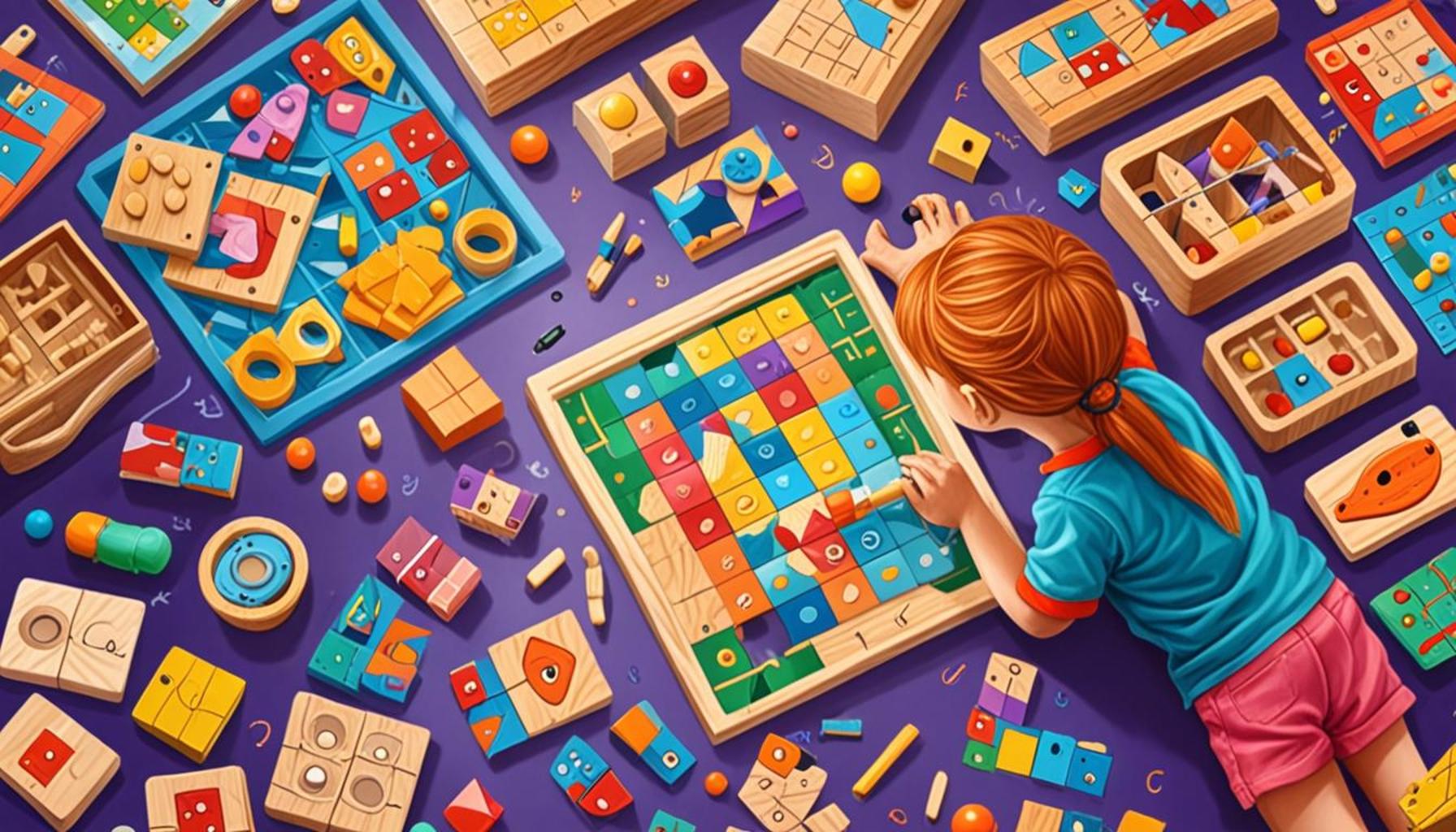
The Importance of Logical Puzzles in Early Childhood Development
In the journey of childhood growth, engaging in logical puzzles plays a crucial role. These stimulating activities not only entertain but also greatly enhance cognitive skills. Understanding their impact can unlock new pathways to effective learning. As children navigate through these puzzles, their minds engage in a delightful dance of reasoning, analysis, and deduction, creating a foundation for lifelong learning.
Logical puzzles, which include everything from Sudoku to riddles, sharpen various essential abilities in children. These cognitive exercises support development in several key areas:
- Critical Thinking: Engagement with puzzles encourages deeper analysis and reasoning. For instance, a child solving a mathematical riddle must dissect various elements to arrive at the correct answer, fostering an analytical mindset that later translates to better decision-making skills.
- Problem Solving: By navigating through challenges posed by logical puzzles, children learn to develop strategies for overcoming obstacles. This experiential learning allows them to approach real-life problems with confidence and creativity.
- Memory: The repetitive nature of puzzles enhances retention and recall. As children repeatedly work through various logical scenarios, they build a mental library of strategies and solutions, which can significantly improve their academic performance.
In Nigeria, where education is a priority, introducing logical puzzles in schools represents an innovative step towards enriching the traditional curriculum. Educational institutions and local communities have started recognizing the need to incorporate these intellectually stimulating activities. For example, a primary school in Lagos may host a puzzle tournament, allowing kids to collaborate in small groups to solve problems. This format not only instills a competitive spirit but also promotes teamwork and social skills, vital in fostering a community of learners who support each other’s cognitive journeys.
Moreover, as parents and educators, recognizing the value of these puzzles can lead to improved educational outcomes. They support academic growth beyond rote memorization; puzzles also nurture creativity and resilience in young minds. Children learn to persevere when faced with difficult challenges, developing a positive approach to learning that can last a lifetime.
Exploring the world of logical puzzles may very well be the key to unlocking a child’s full potential. It inspires curiosity and encourages children to ask questions and seek answers. Therefore, integrating these valuable cognitive games into daily learning can profoundly influence the next generation’s ability to think critically and creatively—skills that are essential in today’s rapidly changing world.
In conclusion, the incorporation of logical puzzles into both home and educational settings can yield significant benefits for children’s cognitive and social development, making it an essential facet of modern learning paradigms in Nigeria and beyond.
SEE ALSO: Click here to read another article
Unlocking the Mind: How Logical Puzzles Benefit Cognitive Skills
The significance of logical puzzles extends far beyond mere entertainment; they serve as vital tools in shaping the cognitive functions of children. As young learners engage with puzzles, they delve into complex reasoning and problem-solving scenarios that stimulate brain development. These activities advocate not just for improved academic performance but also foster essential life skills necessary for navigating the world efficiently.
One of the foremost benefits of engaging with logical puzzles is the enhancement of critical thinking skills. Children are naturally curious, and puzzles channel this curiosity towards analytical reasoning. For example, when faced with a problem like a logic grid puzzle, a child must interpret information, assess relationships, and eliminate possibilities to arrive at the solution. This process nurtures an analytical mindset, equipping them with tools to tackle challenges effectively. In an educational context, the ability to think critically is paramount, providing students with a robust foundation for future learning across all subjects.
Moreover, logical puzzles inherently promote problem-solving abilities. As children engage with various types of puzzles—be it jigsaw puzzles, crosswords, or logic riddles—they learn to strategize and develop innovative solutions. Each puzzle presents unique challenges, encouraging children to experiment with different approaches. This experiential learning fosters resilience as children learn that failure is simply a step towards finding a solution. In Nigeria, where the educational system is evolving, incorporating such puzzles can redefine the way young minds develop problem-solving skills, equipping them to thrive in both academic and real-world settings.
The aspect of memory enhancement in children through puzzles cannot be overlooked. The repetition and variability found in puzzles lead to better retention and recall capabilities. When children are tasked with remembering key elements to solve Sudoku or decipher a riddle, they engage in mental exercises that bolster their cognitive toolkit. This accumulation of knowledge not only aids in their schoolwork but also promotes cognitive flexibility—the ability to adapt thoughts and actions in varying circumstances. In a fast-paced world like Nigeria’s, where adaptability is essential, fostering such memory capabilities in youths can lead to greater academic success.
- Improved Attention Span: Working through logical puzzles requires concentration, enhancing the child’s ability to focus on tasks for longer durations.
- Increased Creativity: The freedom to experiment with solutions within puzzles encourages innovative thinking.
- Social Skills: Group puzzle-solving fosters collaboration, allowing children to develop communication skills and emotional intelligence.
Furthermore, engaging with logical puzzles transcends mere academic performance; it lays the groundwork for collaborative skills and teamwork. In many schools across Nigeria, puzzle competitions are emerging as an engaging way to cultivate not just individual talent but also group dynamics. This interactive setting illuminates the importance of learning together, allowing children to support one another’s cognitive journeys while celebrating their unique problem-solving styles.
Incorporating logical puzzles into daily learning opens doors to a treasure trove of cognitive benefits. Children not only become adept at solving problems but also grow in their appreciation for learning itself. Thus, their playful encounters with these intellectual challenges can have lasting effects, providing them with the mental resilience and creativity they need in an ever-evolving society. As the appreciation for these cognitive tools spreads, so too will the foundations for a new generation of thinkers ready to tackle the complexities of the world around them.
| Category | Description |
|---|---|
| Problem Solving Skills | Logical puzzles teach children to approach problems methodically, enhancing their ability to analyze situations. |
| Critical Thinking | Engaging in logical puzzles encourages children to evaluate options and think critically about solutions. |
| Memory Enhancement | Solving puzzles requires the retention of patterns and strategies, greatly improving memory skills. |
| Attention to Detail | Puzzles require careful observation, fostering an increased awareness of details in various scenarios. |
Engaging children with logical puzzles presents a unique opportunity for holistic cognitive growth. The experience of tackling these challenges not only sharpens their problem-solving skills but also nurtures their critical thinking abilities. As children navigate through different puzzles, they develop logical reasoning and learn to evaluate multiple options before arriving at the best solution, laying a foundation for sound decision-making in the future.Moreover, puzzles significantly enhance memory retention, as children must memorize various strategies and patterns to achieve success. This cognitive exercise not only promotes memory enhancement but also contributes to increased attention to detail. As they become adept in these areas, children prepare themselves to face more complex problems and navigate daily challenges with greater ease.The importance of logical puzzles extends beyond mere entertainment. They serve as vital educational tools that enrich a child’s development, making it crucial for parents and educators to integrate such activities into learning environments. Encouraging this kind of intellectual engagement acts as a catalyst for children’s growth and success in numerous academic and practical pursuits.
CHECK OUT: Click here to explore more
Fostering Emotional Intelligence Through Puzzles
While logical puzzles are often viewed through the lens of cognitive capabilities, their role in enhancing emotional intelligence should not be underestimated. By navigating through various logical challenges, children not only exercise their brains but also develop vital emotional skills, such as empathy and frustration tolerance. Encountering and overcoming challenges within puzzles mirrors real-life situations where patience and emotional regulation are essential. For instance, when a child struggles with a particularly tough crossword or struggles to figure out a Sudoku grid, they learn to cope with frustration and disappointment, gaining emotional resilience that can benefit them in their interactions with peers and authority figures alike.
Furthermore, the social aspect of solving puzzles can significantly boost cooperative learning. Many puzzles lend themselves to group settings, where children can collaborate to arrive at solutions. This not only encourages teamwork but also fosters a sense of community and shared responsibility. Activities such as puzzle clubs in schools can create a supportive environment where children learn to express their thoughts articulately, listen actively to others, and provide constructive feedback. These experiences can greatly enhance their ability to communicate effectively, a skill that is increasingly important in today’s interconnected world.
In Nigeria’s vibrant educational landscape, where peer-to-peer learning is vital, introducing puzzles as a team-building exercise is a powerful strategy. Teachers can incorporate logical puzzles into their curriculums as collaborative projects that require discussion, debate, and teamwork. Such initiatives have the potential to create an atmosphere of camaraderie, enabling students to bring diverse perspectives to the table and learn from one another. This is not only beneficial in academic settings but also prepares the students for future workplaces where collaboration is often key to success.
- Boosting Self-Confidence: Successfully solving puzzles fosters a sense of accomplishment in children, enhancing their self-esteem and encouraging them to tackle more complex challenges.
- Encouraging Curiosity: Logical puzzles often introduce new concepts and ideas, sparking curiosity and inspiring children to explore subjects beyond their existing knowledge base.
- Promoting Ethical Thinking: Many puzzles require moral reasoning, especially when decisions affect other characters or outcomes, guiding children to think critically about ethics and morals.
Moreover, the exposure to cultural context in puzzles can enrich children’s understanding of the world around them. By solving puzzles that incorporate local Nigerian themes, legends, or history, children become more connected to their cultural heritage. Educators can create puzzles that reflect community stories, popular proverbs, or significant historical events, thereby making learning both relevant and relatable. This connection fosters not just academic engagement but also a deep sense of identity and belonging among children.
Logical puzzles can also serve as a pathway to ignite interests in STEM (Science, Technology, Engineering, and Mathematics) subjects. As children engage with mathematical puzzles or logic-based challenges, they build a foundational comfort with numeric concepts and problem-solving strategies. This enthusiasm can lead to a pursuit of further education and careers in STEM fields, which are increasingly important for Nigeria’s growing economy. By embracing puzzles as a learning tool, parents and educators can strategically steer young minds toward future opportunities.
In essence, the multifaceted advantages attributed to logical puzzles stretch far beyond mere cognitive exercises. They become essential building blocks for a child’s emotional growth, social skills, and cultural understanding, thus forming a well-rounded framework for overall development. Investing time in these intellectual endeavors isn’t just about fostering a generation of critical thinkers; it is about crafting a holistic approach to nurturing resilient, empathetic, and engaged citizens ready to contribute meaningfully to society. The captivating world of logical puzzles is indeed an invaluable resource that, when harnessed properly, can unleash the full potential of children across Nigeria.
CHECK OUT: Click here to explore more
Conclusion: Unleashing Potential Through Puzzles
In conclusion, the significance of logical puzzles in the cognitive development of children cannot be overstated. As explored throughout this article, puzzles serve as more than mere entertainment; they are powerful tools that stimulate critical thinking, bolster emotional intelligence, and encourage social interaction among young minds. By confronting and solving these challenges, children not only engage in intellectual exercises but also cultivate important life skills that prepare them for future challenges.
The ability to approach problems from multiple angles, embrace difficulty, and work collaboratively with peers sets a strong foundation for both academic success and personal growth. In an increasingly competitive world, equipping children with the resilience and adaptability fostered through logical puzzles ensures they will stand out in their pursuits. Moreover, as educators and parents leverage culturally relevant puzzles to deepen emotional connection and community awareness, they instill a lasting identity that strengthens the fabric of Nigeria’s diverse society.
Furthermore, the appeal of logical puzzles extends beyond the classroom, igniting an early interest in STEM fields that are vital to the nation’s future. As children learn to enjoy problem-solving through engaging and relatable puzzles, they become more inclined to explore academic pathways that align with the demands of Nigeria’s evolving economy.
Ultimately, investing in logical puzzles is an investment in the holistic development of children. It nurtures well-rounded individuals equipped to thrive in diverse environments, embrace continuous learning, and contribute positively to the community. As we embrace the practice of incorporating puzzles into learning, we pave the way for a brighter, more innovative future for generations to come.